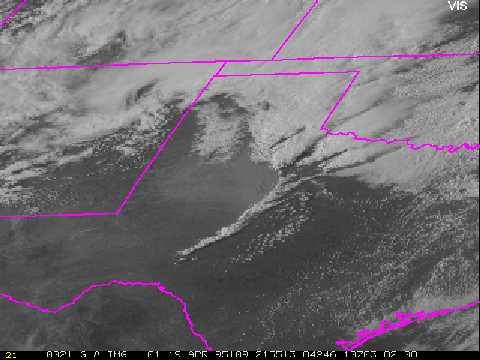
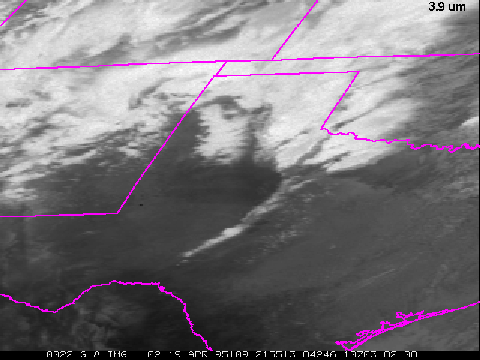
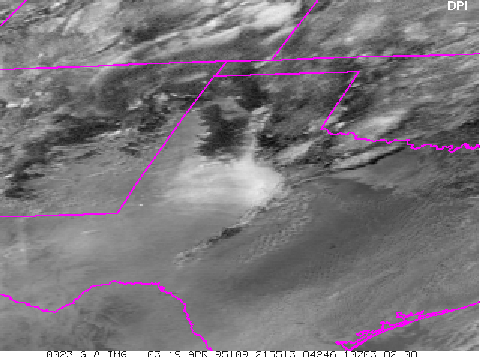
 which is basically the 3.9 um
channel output minus that from the other longwave IR channels. The detectability
of other visibility contaminates is also under investigation, including smoke,
which appears to be dependent upon solar radiation and scattering angle, and
volcanic ash, which may be detectable both day and night.
which is basically the 3.9 um
channel output minus that from the other longwave IR channels. The detectability
of other visibility contaminates is also under investigation, including smoke,
which appears to be dependent upon solar radiation and scattering angle, and
volcanic ash, which may be detectable both day and night.
Those interested in learning more about the use of PCIs in highlighting various meteorological features are invited to read the following paper: Hillger, D.W., 1996; Meteorological features from principal component transformation of GOES-8/9 Imager and Sounder data; Eighth Conference on Satellite Meteorology andOceanography, AMS, 28 Jan - 2 Feb, Atlanta, GA, 4-p.