
RAMM/CIRA 1st Quarter Report


Meteosat Second Generation Data: A collection of full resolution (temporal, spectral, and spatial) Meteosat Second Generation data was collected over the tropical Atlantic 1 June – 3 December for future satellite applications. (J. Knaff)

IR Imagery Collection: An automated collection of 1 km, Mercator, IR imagery over Global tropical cyclones has been started. At present NOAA Limited Area Coverage (LAC) and High Resolution Picture Transmission (HRPT), and NASA Moderate Resolution Infrared Spectroradiometer (MODIS) data are accessed and utilized. Fig. 1 shows an example from tropical cyclone SH0306. These imagery will be utilized to study the effects of increased resolution on tropical cyclone intensity and structure algorithms. (J. Knaff) Click on image to enlarge.
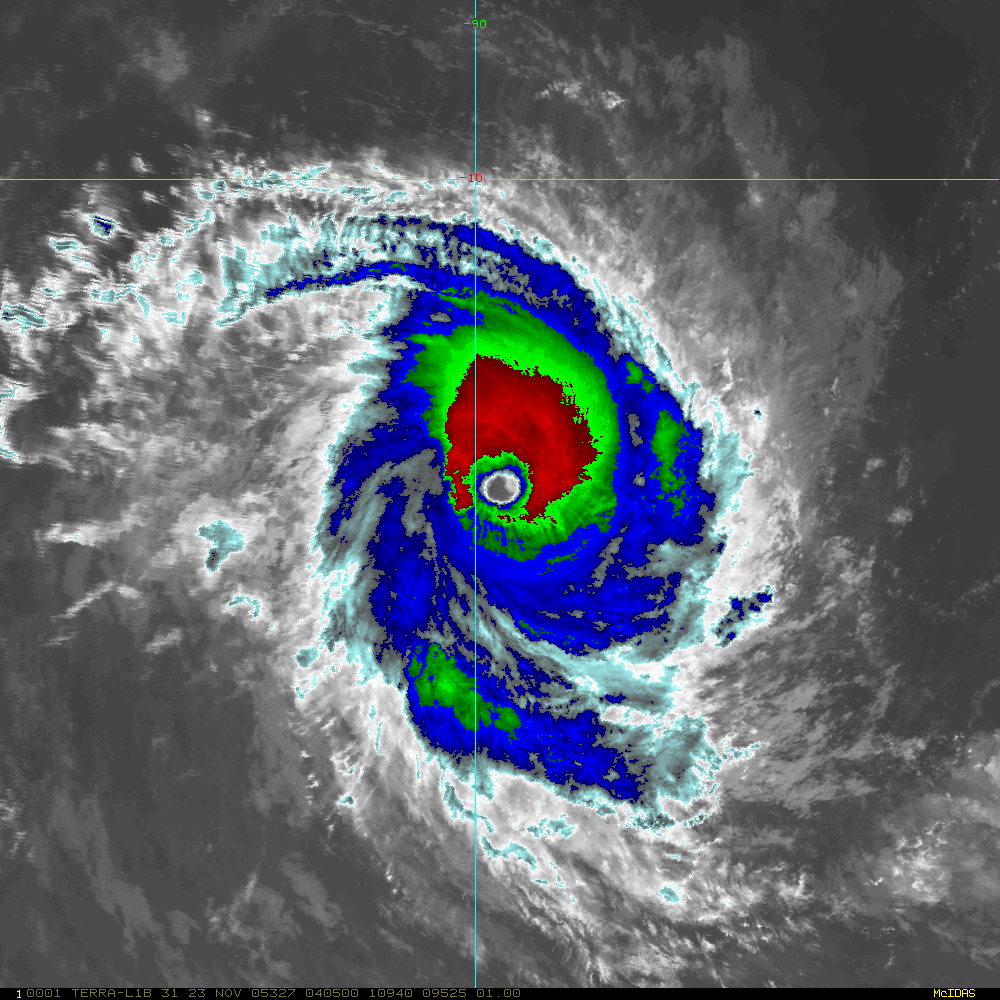
Figure 1: Example of 1-km, Mercator IR imagery that is being collected for future risk reduction activities. Tropical cyclone SH0306 on 23 November 2005 at 0405 UTC and and intensity of 115 kt is shown.
Archived Images: The AVHRR (Advanced Very High Resolution Radiometer) and the MODIS (Moderate Resolution Imaging Spectroradiometer) IR sensor provide 1-km resolution images that show details and features that are not well observed in geostionary images. We are now archiving 1-km Mercator cyclone centered remapped IR images from AVHRR and MODIS with tropical cyclones. Two examples of Hurricane Wilma are shown in Figs.2-3. (R. Zehr, J. Knaff)
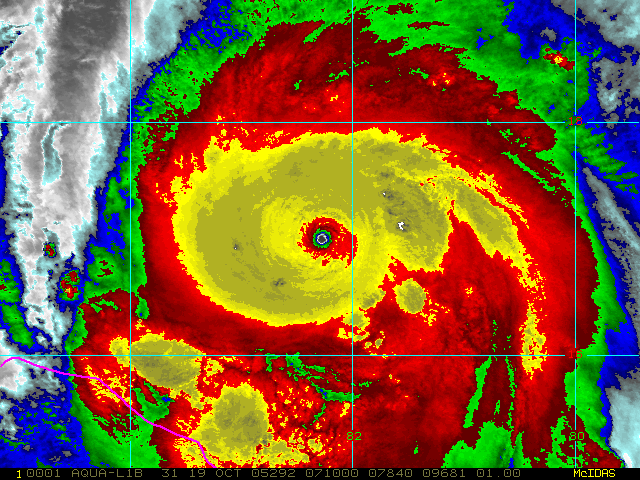
Fig. 2. Hurricane Wilma MODIS 1-km IR, 0710 UTC 19 October 2005.
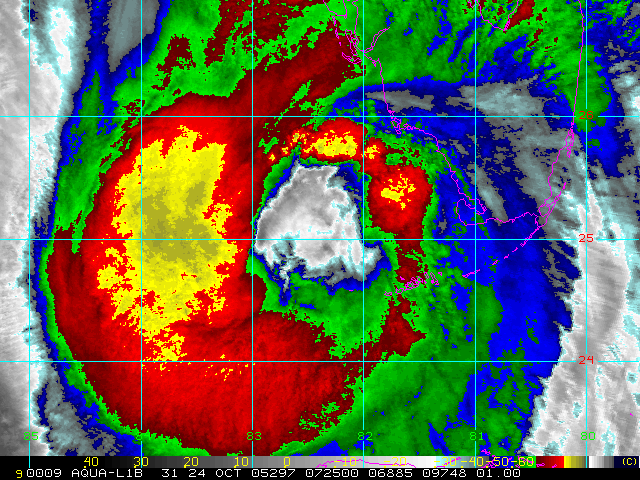
Fig. 3. Hurricane Wilma MODIS 1-km IR, 0725 UTC 24 October 2005.
Synthetic GOES-R ABI 10.35 µm Imagery: Synthetic GOES-R ABI 10.35 µm imagery has been created from a simulation of hurricane Lili. Synthetic images were created every fifteen minutes with a horizontal footprint of 2 km over a 12 hour period. These images will be treated as observations and will be used in an assimilation experiment of hurricane Lili. (L. Grasso and D. Zupanski)