Weaver, Dostalek, Grasso, Hilgendorf,
Bikos, Motta
A paper entitled "Examples of nowcasting in Central Plains and southeastern United States severe thunderstorm environments using satellite and Doppler radar," by J. Weaver, E, Hilgendorf, L. Grasso, and K. Pence (NWS) has been submitted to Weather and Forecasting. The paper demonstrates how the combination of satellite imagery and Doppler radar data together produce much more accurate severe thunderstorm nowcasts than either one alone.
Material from the satellite/radar paper has been included in the new VisitView teletraining module on the use of RSO data. (see VISIT)
The data collection segment of the Lubbock, TX dryline experiment is complete. Several interesting cases of severe weather in the Texas panhandle have been documented. Research on a severe weather outbreak that occurred on 25 May 1999 has begun. In this case, a weak flow, severe envirnoment resulted in multiple splitting thunderstorms each of which caused severe weather. This work will culminate in a journal article by J. Dostalek, J. Weaver, L. Grasso, and L. Phillips (NWS/SOO at Lubbock, TX).
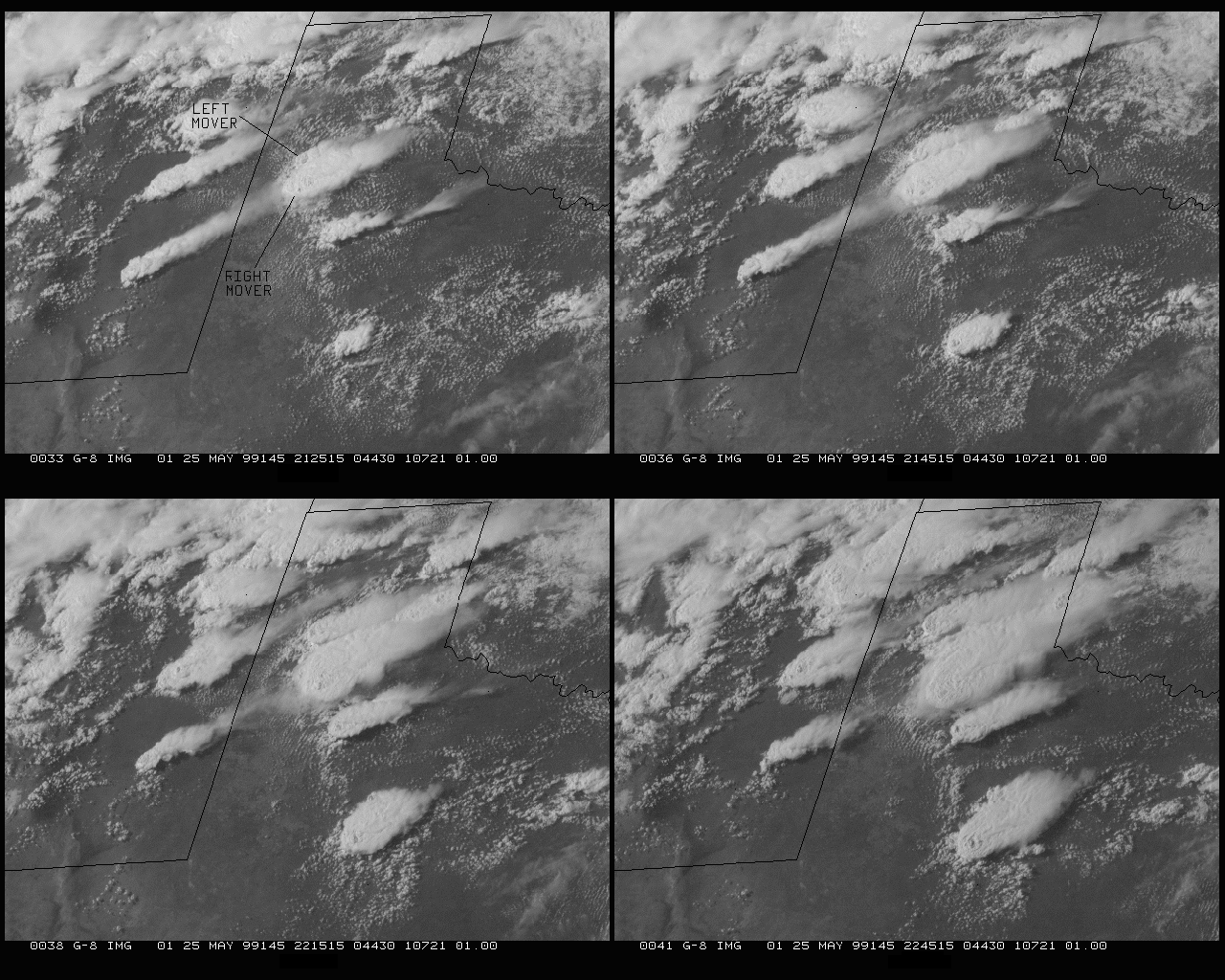
Click on image to enlarge
Reviewer's comments for the 31 May 1996 Kansas and Colorado severe weather case study have been addressed, and the paper is awaiting publication. No publication date has been given as yet.